ServicesGutters
Gutter Installation and Repair in Nashville, NC
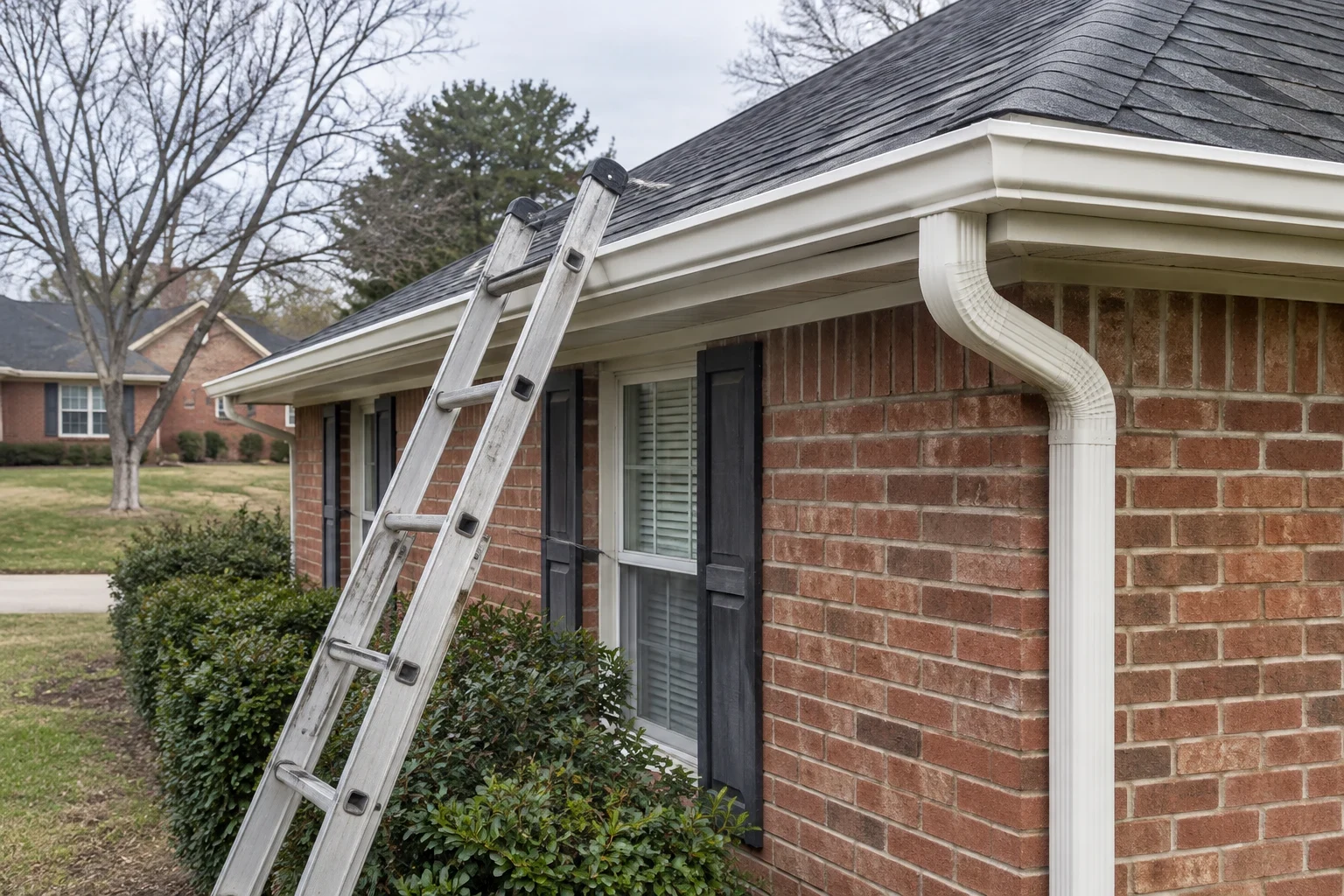
We install continuous aluminum gutters and repair the ones that sag, drip or spill over. Trough and downspout sizes are matched to the water your roof really sheds. You get a scheduled install day, a defined arrival window and a phone call if rain changes the plan.
Why Gutters Matter to Your Roof
Every rain, your shingles send water to the eave. The gutter has to collect it and carry it clear of the fascia, the siding and the foundation. When the gutter falls behind, water slips behind the trough, wets the fascia board and the edge of the roof deck, or collects along the base of your home.
Nearly every gutter failure we see comes from a short list of causes: a trough too small for the roof area feeding it, not enough downspouts, a pitch that runs the wrong way, or spike-and-ferrule hangers working loose from softened wood. We check each one before we recommend anything. We also look closely at where the drip edge and starter course meet the gutter, since that joint decides whether runoff drops into the trough or runs down behind it.
We are a licensed general contractor in North Carolina. Most gutter jobs take one day, and we name that day ahead of time along with an arrival window, not a loose "sometime this week."
What Our Gutter Work Covers
- One-piece aluminum runs
- We roll each run from a coil on site, so joints only appear at corners and end caps. With fewer joints, there are fewer sealant lines that can crack and drip.
- Sizing based on your roof
- We take measurements of each roof plane's area and slope, then decide whether a 5-inch or 6-inch K-style trough fits. Large or steep planes that empty into a single run usually need the 6-inch.
- Downspouts that keep up
- We space downspouts so no run carries more water than it can drain, and we use 3x4 downspouts where flow is heavy. Extensions or splash blocks carry the water away from your foundation.
- Hidden hangers and proper pitch
- Hangers screw into the fascia about every 24 inches and hold far better than old spikes. We set a slight fall, roughly a quarter inch per 10 feet, so water moves toward the outlet instead of sitting.
- Fascia and drip edge checks
- If the fascia behind an old gutter is soft, we show you before new gutters go up. Hanging new gutters on rotted wood just restarts the problem.
- Repairs and resealing
- For gutters with life left, we reseal leaking corners, rehang sagging sections and correct pitch. We tell you when repair makes sense and when replacement is the better spend.
Signs Your Gutters Need Attention
Overflow in heavy rain
Water sheeting over the front edge during a downpour usually means the trough is undersized, clogged or pitched the wrong way. Summer thunderstorms here show it fast.
Sagging or pulled-away sections
A gutter that dips between hangers holds standing water, which adds weight and pulls the fasteners further loose.
Peeling paint or stains on fascia
Streaks and blistering behind the gutter point to water getting between the trough and the board. That often leads to rot.
Drips at seams and corners
Older sectional gutters rely on sealant at every joint. Once it dries and cracks, each seam becomes a leak.
Erosion or puddles near the foundation
Washed-out mulch beds or soggy ground under a downspout means water is being dumped where it can reach your crawlspace or slab.
What Moves the Price of Gutters
Most of the price comes down to two things: the total length of trough running along your eaves and whether the fascia boards behind it are still sound. We take those measurements on site and itemize the estimate, so you can see what each charge covers. If you'd rather pay over time, financing is available through Acorn Finance.
Linear footage and corners
The total length of the runs accounts for most of the cost. Every inside or outside miter adds material and labor time.
Trough and downspout size
A 6-inch trough with 3x4 downspouts takes more aluminum than the common 5-inch trough with 2x3 downspouts.
Fascia condition
Soft or rotted boards have to be replaced before new hangers can grip. Some rot only shows once the old gutters are off, so if extra wood is needed we photograph it and talk with you before adding it to the bill.
Height and access
Second-story eaves, steep ground below the roof edge or narrow side yards mean more ladder setup and slower work.
Guards and extensions
Gutter guards for lots with heavy pine or oak drop, and extensions on the downspouts, are optional and priced as separate lines.
How a Gutter Job Runs
- 1
Free inspection and photo report
We check the gutters, downspouts, fascia and roof edge, then send you photos of what we found. You see the problem yourself before deciding anything.
- 2
A written plan and a set day
You get a line-item scope and an install date. The day before, we confirm a morning or afternoon arrival window.
- 3
Updates if weather moves the plan
Hangers and sealant need dry conditions. If rain forces a change, we call you as soon as we know and give you the next open date.
- 4
Removal, install and cleanup
We take down the old gutters, repair any flagged fascia, form and hang the new runs, then test them with a hose. Old metal, screws and scraps leave with us the same day.
Gutter Questions We Hear Often
How long does a gutter install take?
A typical house is finished in a single day. Bigger homes, or jobs where fascia boards need replacing, may need part of a second day. When we book your date, we tell you up front whether to plan for one day or two.
Should I replace my gutters or just repair them?
When the trough itself is solid and the trouble is a few leaking joints or loose hangers, a repair usually does the job. Gutters that are too small, sectional runs with many failing joints, or long bent stretches are cheaper to replace than to keep patching. Either way, we show you photos and give you a straight answer.
Should I do gutters at the same time as a new roof?
In many cases, yes. A roof replacement already removes the drip edge, which makes it the best moment to fix how the roof edge sends water into the gutter. If your shingles still have years left, new gutters can be installed by themselves with no trouble.
Do I need gutter guards?
That depends on what grows around your home. Pine needles and oak leaves pack troughs and downspouts fast, and guards reduce how often you clean them. On an open lot with few trees, the added cost may not pay off.
Will insurance pay for storm-damaged gutters?
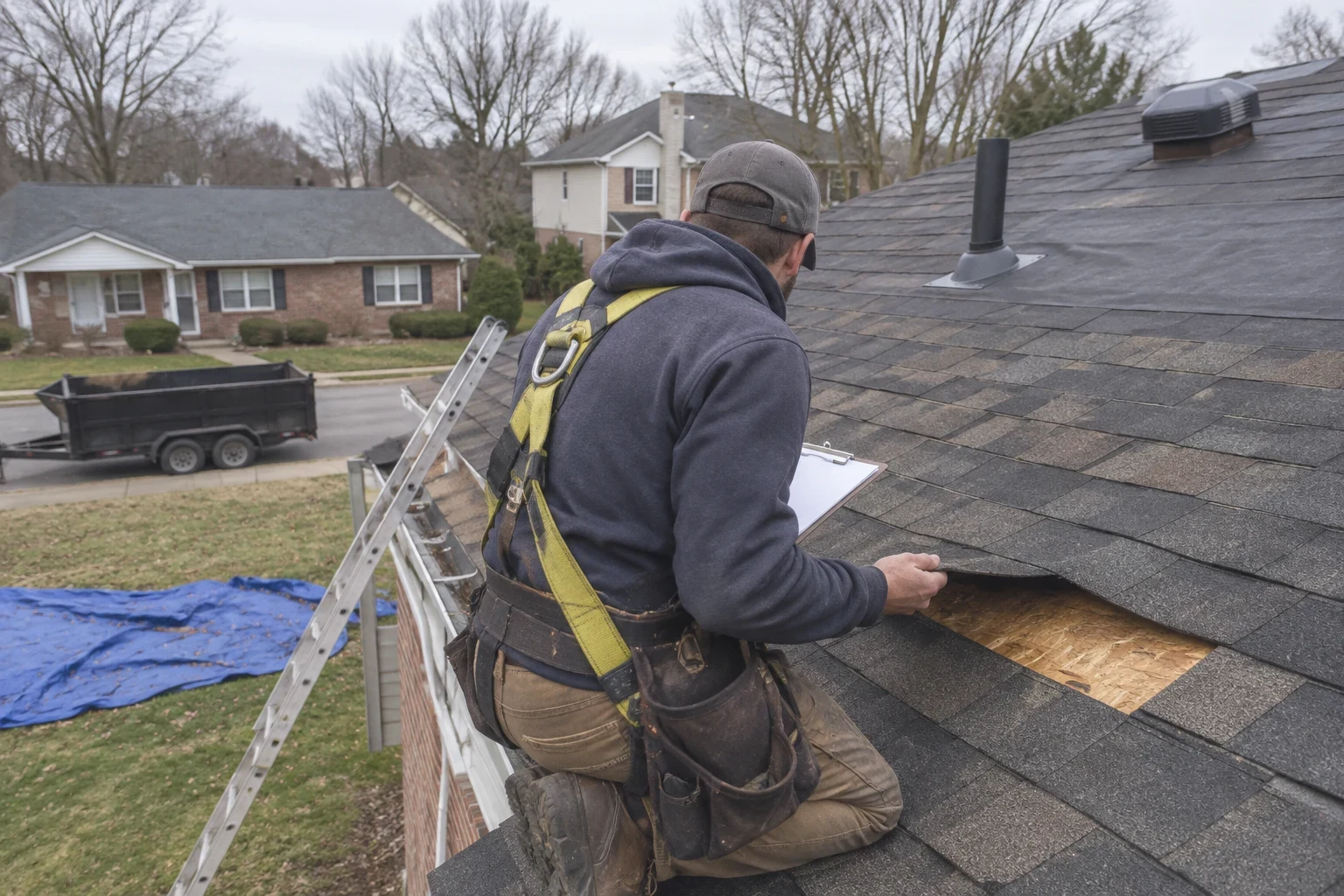
It can, if wind, hail or a falling limb caused the damage. We document the dents, bends and pulled hangers with photos, and we can be on site when the adjuster looks at your home and walk you through each step of the claim. Whether it is covered is the adjuster's call. Our Storm Damage Repair page goes over that process in more detail.
Find Out What Your Gutters Need
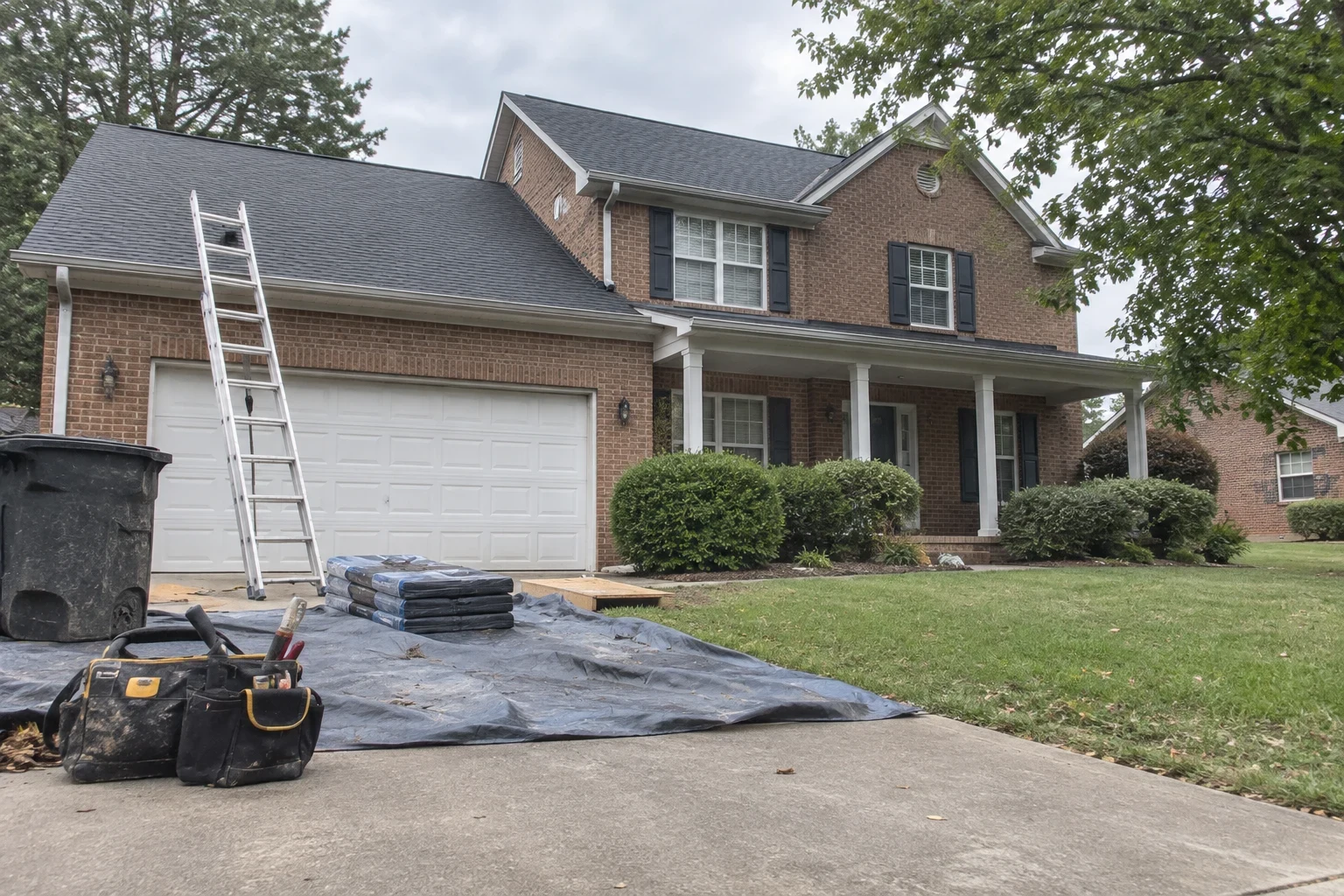
We will inspect your gutters and roof edge, send you a photo report and tell you plainly whether repair or replacement fits. If work makes sense, you get a set day and an arrival window.