ServicesCommercial Roofing
Commercial Roofing in Nashville, NC
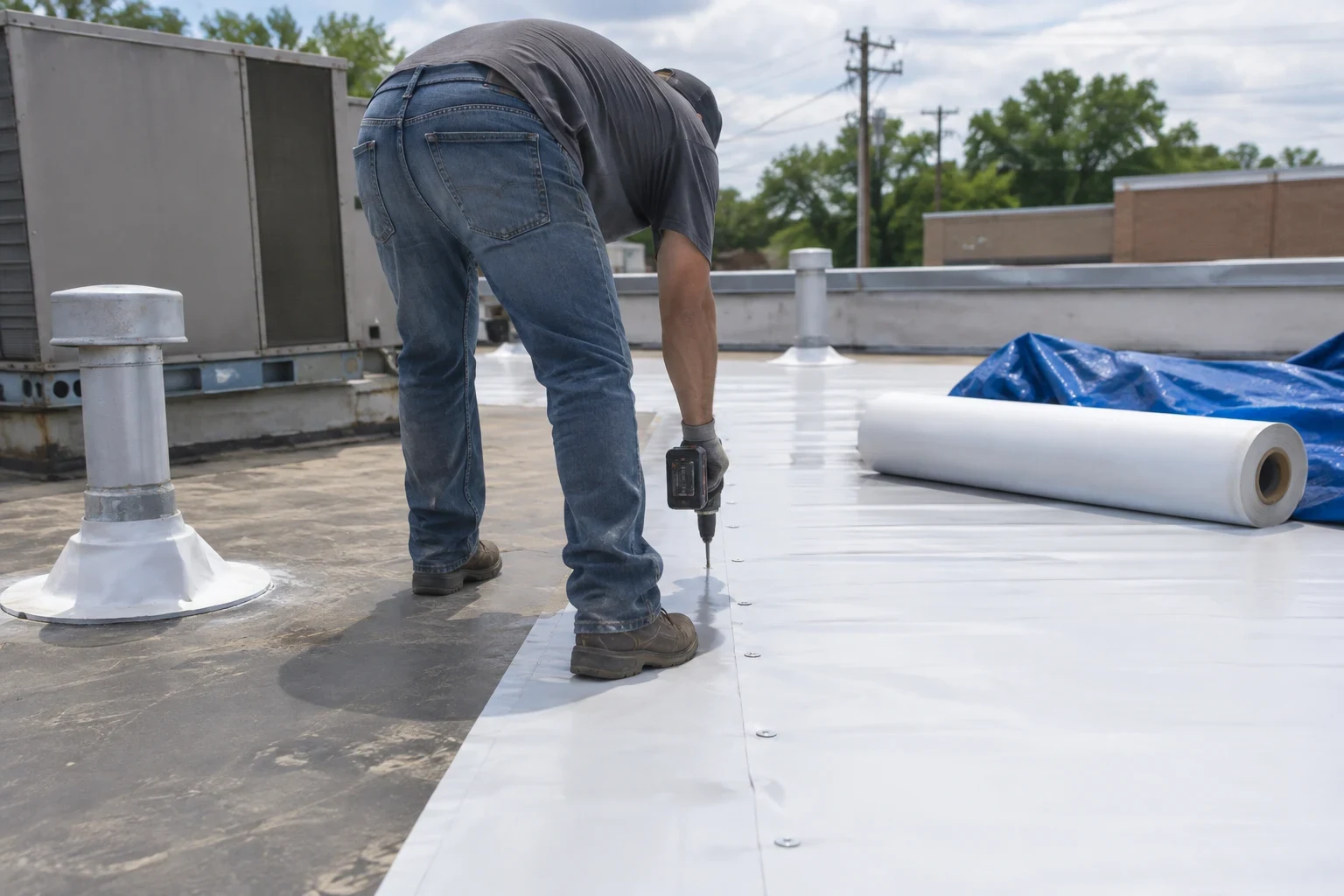
We repair and replace roofs on existing commercial buildings, from low-slope membrane roofs to pitched shingle roofs on offices and churches. Before work starts you have a written scope and a start date we can actually hold, each work day comes with an arrival window, and if weather shifts things, we call you.
Roof work that fits around a running business
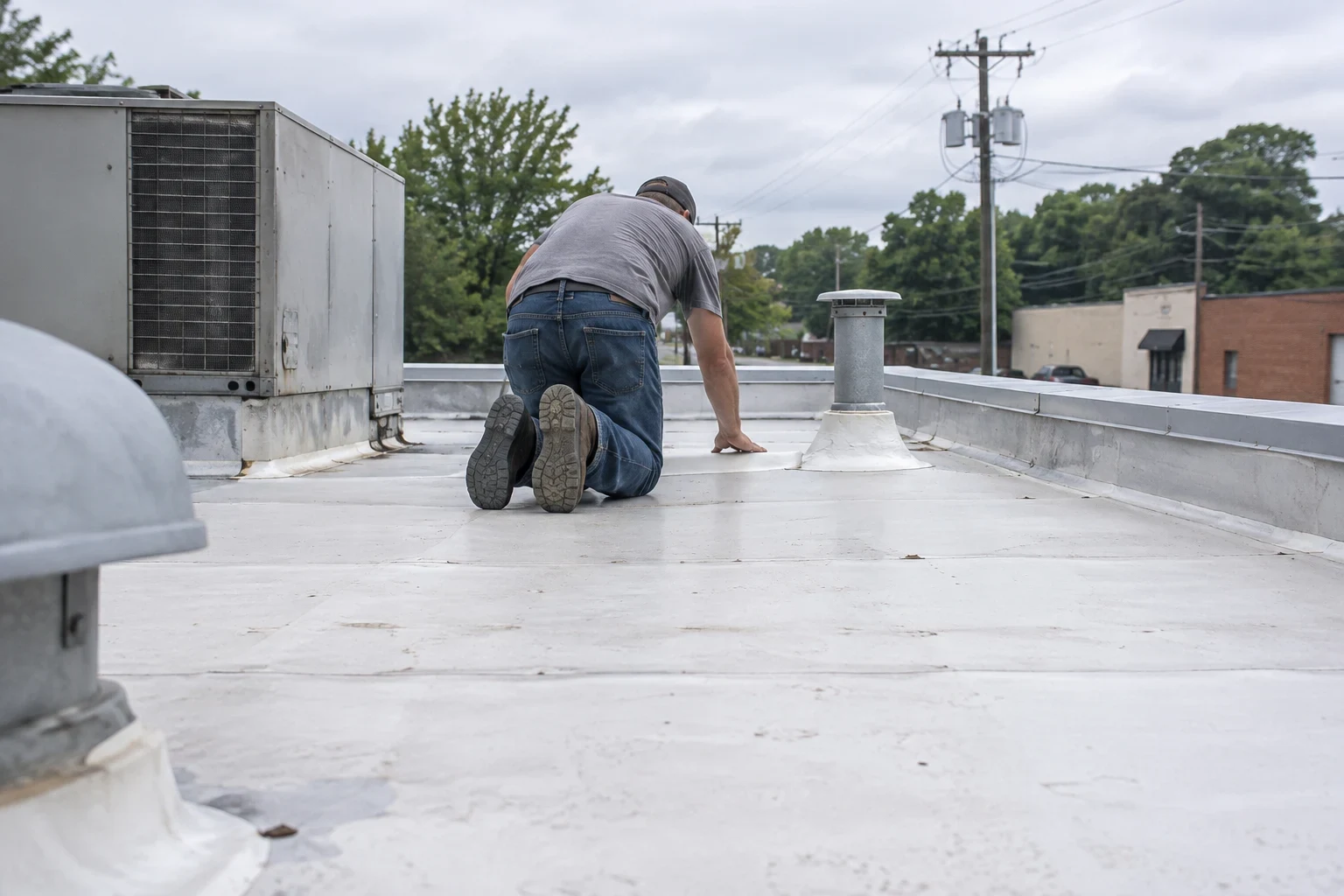
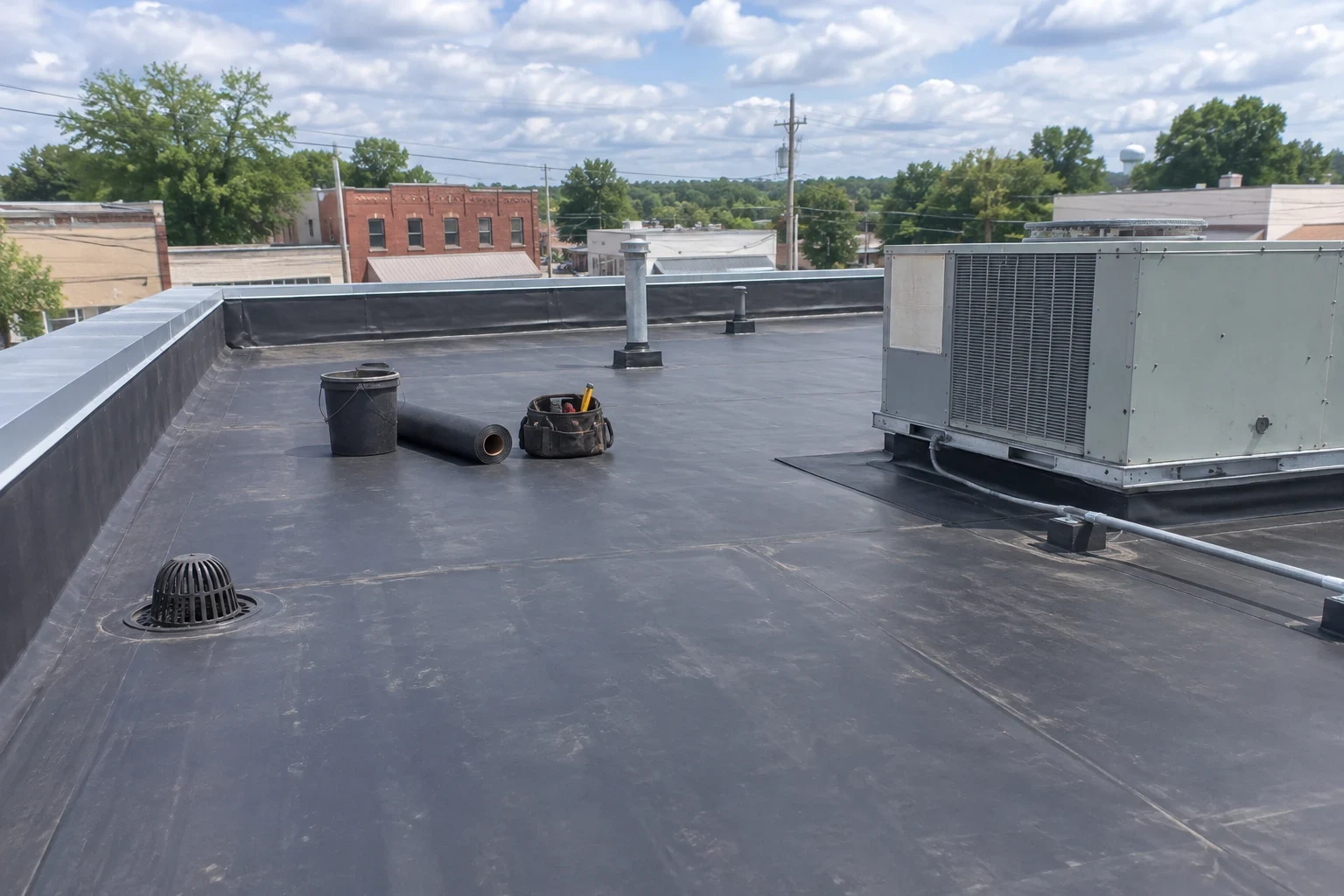
Most commercial roofs we work on around Nashville, Rocky Mount and Wilson are low-slope: TPO, EPDM or modified bitumen over rigid insulation on a steel or wood deck. These roofs rarely fail in the middle of a sheet. They fail at seams, at flashing around rooftop units and pipes, and where water sits for days because a drain or scupper is partly blocked.
Our commercial work is roofing only: repairs, recovers and tear-off replacement on buildings that are already standing. We are a licensed general contractor in North Carolina, and on commercial jobs we stay focused on the roof system, its flashing, edge metal and drainage.
Your staff and customers still need to get through the door. So we plan the schedule before we order materials, and you know which days crews are up top, which entrances stay open and when the noisy tear-off happens.
What our commercial roofing work covers
- Leak tracing and membrane repair
- Water often runs along the deck and drips several feet from where it entered, so the stained tile is rarely the source. We trace it back, then heat-weld TPO patches, rebuild EPDM seams with primer and seam tape, or replace damaged modified bitumen plies.
- Penetration and curb flashing
- Most low-slope leaks start at HVAC curbs, vent stacks, conduit and skylights. We replace cracked pitch pans and dried-out sealant with proper boots and curb wraps that move with the roof.
- Drainage corrections
- Standing water wears out a membrane fast and adds weight to the deck. Our crew clears drains and scuppers and resets them at the right height, builds tapered insulation crickets where water pools, and ties the roof edge into gutters and downspouts sized for the runoff.
- Recover or full tear-off
- When the deck is sound and there is only one existing layer, recovering over new cover board can save several days. When core cuts find wet insulation, we strip to the deck so trapped moisture is not sealed under the new membrane.
- Shingle roofs on commercial buildings
- Plenty of smaller offices, churches and storefronts sit under steep-slope shingle roofs. GAF has certified us as a Master Elite Contractor, and we install GAF architectural shingle systems on these buildings with our 5-year workmanship warranty on architectural shingle roofs behind the work.
Warning signs on a commercial roof
Ceiling tiles that stain or sag
If a water mark on a tile spreads a little wider after every rain, the membrane is already letting water through and the insulation above is taking it on.
Ponds that outlast two days
Water still sitting after 48 hours usually means a clogged drain, a low spot in the deck or crushed insulation. Every round of sun on standing water wears down the membrane surface.
Blisters, bubbles or open seams
Moisture trapped under the membrane swells in summer heat and pushes up blisters. Seam edges that lift give wind-driven rain a direct path beneath the sheet.
Flashing pulling off parapet walls
Once base flashing separates from a parapet or wall, water slips behind it and travels down inside the wall cavity, often unnoticed for months.
Spongy spots underfoot
A section that gives when you step on it typically sits over wet insulation. Soaked insulation loses most of its R-value, and higher cooling bills are often the first clue.
What drives the price of a commercial roof job
On a commercial roof, the layers under the membrane usually move the price more than the membrane does. Before we quote, we measure the roof and pull core samples, and each line of the written estimate is priced separately so you can compare a repair, a recover and a full replacement side by side. Financing is available through Acorn Finance for owners who want to spread the cost across monthly payments.
Square footage and rooftop equipment
Area sets the starting point. Each HVAC curb, drain, vent and conduit run needs its own flashing detail, so a compact roof crowded with units can take more crew hours than a larger, open one.
What the cores show underneath
Wet insulation has to come out, and corroded steel or rotted wood decking must be replaced before anything new goes down. The core samples settle this question before a number goes on paper.
Recover or tear-off
Installing over the existing roof skips removal and haul-away, which shortens the schedule and lowers disposal costs. That option only exists when the current roof is dry and code allows one more layer.
Membrane choice and thickness
TPO, EPDM and modified bitumen each come with different material and labor costs. A thicker membrane costs more up front but holds up better against foot traffic and dropped tools near mechanical units.
Lifting and work hours
When materials need a lift or crane to reach the roof, or the crew can only work early mornings or weekends, the labor share of the estimate goes up accordingly.
How a commercial roofing job runs
- 1
Free inspection and photo report
We walk the roof, check drains, seams and flashing, and photograph everything we find. On low-slope roofs we may pull a small core to test the insulation for moisture, sealing the cut before we go. The photo report comes with a plain repair-or-replace answer.
- 2
Written scope and a real schedule
Each item in the estimate is listed separately. You get a start date, the number of working days, and work hours that fit your business, including early starts if tear-off noise would disturb customers.
- 3
Work days with set arrival windows
Every morning you know when the crew shows up. Materials are staged away from entrances, walkways stay clear, and we tear off only the section we can make watertight again by the end of that day.
- 4
Updates when weather changes the plan
An afternoon thunderstorm can halt membrane welding. If that happens, we phone you with the new date instead of letting you find an empty parking lot.
- 5
Final walk and cleanup
We probe every seam, check each flashing detail, sweep the parking area with a magnet for stray fasteners, and walk the finished roof with you or your property manager.
Commercial roofing questions
Can our business stay open while you work on the roof?
Usually, yes. We place the dumpster, stage materials and time the loud tear-off around your operating hours, and we tell you in advance which doors are affected on which days. Crews rarely need to come inside at all.
How do you decide between repair and replacement?
We weigh three things: how much insulation is wet, how many seams and flashings have let go, and the age of the membrane. A few isolated problem spots call for a repair. When moisture has spread across large sections, patching just means paying for the next leak, and our photos will show you why we say so.
How long does a commercial roof replacement take?
That depends on roof area, how many penetrations there are and whether we recover or tear off. Your estimate lists the number of working days, and any rain days get added on top instead of crammed into the plan. When dates move, we phone you.
Do you help with insurance claims after hail or wind damage?
Yes. We photograph the damage, meet your adjuster on the roof and walk you through each step of the claim. Coverage is still the adjuster's call, but they are looking at the same evidence we documented.
How often should a flat roof be inspected?
Plan on two checks a year, one after winter and one before it, with an extra look after any heavy storm. Finding a blocked drain or a lifting seam early keeps a quick fix from becoming soaked insulation across an entire section.
Find out what your roof needs and when we can do it
We will inspect the roof, photograph the problem areas and give you a straight repair-or-replace answer with a schedule attached. The inspection is free.